Every successful online store starts with one critical decision: choosing the right platform to build it on. If you’ve been researching ecommerce solutions, you’ve almost certainly come across the name Shopify. But what is Shopify, exactly, and is it the right choice for your business?
Shopify is one of the most powerful and beginner-friendly ecommerce platforms in the world, trusted by over a million merchants across more than 175 countries. Whether you want to sell handmade crafts, digital products, or physical goods, Shopify gives you everything you need to launch, manage, and grow a professional online store without requiring any technical expertise.
In this complete guide, we’ll walk you through everything a new merchant needs to know. You’ll learn how Shopify works, what features it offers, how much it costs, and how to decide if it’s the right fit for your goals. By the time you finish reading, you’ll have a clear, confident understanding of the platform and a solid foundation to take your first steps toward building your ecommerce business.
What Shopify Actually Is (In Plain Language)
Shopify is a cloud-based ecommerce platform that enables individuals and businesses to build, manage, and scale online stores without writing a single line of code or purchasing server infrastructure. As of 2026, the platform operates across more than 175 countries, supporting everyone from solo entrepreneurs selling handmade goods to enterprise brands processing millions of transactions daily. According to The State of Shopify in 2026, there are approximately 2.88 million live stores on the platform, with store counts growing 11% year-over-year in Q1 2026 alone.
What “Cloud-Based” Actually Means for You
When people describe Shopify as cloud-based, they mean your store lives entirely on Shopify’s own servers and infrastructure rather than on hardware you own, rent, or manage. In practical terms, you never purchase a hosting plan, configure a web server, apply security patches, or worry about whether your site can handle a traffic spike. Shopify handles all of that automatically, behind the scenes. For a new merchant, this eliminates two historically significant barriers at once: the technical expertise required to administer a server environment, and the upfront capital cost of acquiring one.
What Shopify Replaced
Before platforms like Shopify existed, launching an online store was genuinely difficult. Merchants faced three compounding obstacles: they needed developers to build and maintain custom storefronts, they had to manage self-hosted server environments that required ongoing technical attention, and they often cobbled together separate systems for payments, inventory, and point-of-sale. Each of those layers added cost, complexity, and delay. Shopify consolidated all of it into a single subscription-based platform, dramatically lowering the barrier to entry for commerce and making independent retail viable for people without technical backgrounds or large capital reserves.
The Scale Behind the Definition
The numbers that define Shopify’s footprint are striking. In 2024, 875 million unique shoppers transacted across Shopify-powered stores, roughly 1 in 6 internet users worldwide. The platform has facilitated approximately $1 trillion in total lifetime global sales, and gross merchandise value in 2024 reached $293 billion, up 24% year-over-year. These figures are worth anchoring in your mind early, because they frame exactly what kind of infrastructure you are accessing when you open a Shopify store.
What Shopify Is Not
This distinction matters enormously for anyone new to ecommerce: Shopify is not a marketplace. On a marketplace, customers browse a shared catalog and can discover any seller organically. Shopify gives you your own standalone storefront with your own URL and your own brand. It does not supply you with an audience. The 875 million shoppers mentioned above visited individual brand stores; they were not browsing a shared Shopify catalog. That reality has a direct consequence. To generate sales, you must actively drive traffic through paid advertising, SEO, social media, or other channels. As noted in Shopify Statistics 2026, 90% of Shopify merchants connect their stores to two or more external sales channels, precisely because the platform provides the store but not the customers. That distinction becomes one of the most important things to understand before you open your first store.
What Is Actually Inside the Shopify Platform
Understanding what Shopify actually contains is the fastest way to judge whether it fits your business. The platform is not a single tool but a collection of integrated systems that work together from the moment you activate your account.
Core Store Management Tools
The storefront builder uses a drag-and-drop theme editor, meaning you can rearrange page layouts, swap images, and update typography without touching code. The product catalog lets you manage SKUs, variants, images, and inventory across multiple locations inside one admin panel, so you are never jumping between separate systems to track what is in stock. Order management consolidates every incoming purchase, fulfillment status, and customer message in one view, which replaces the spreadsheet-and-email combination that many new sellers start with. Customer profiles store purchase history, contact details, and audience tags natively, giving you a basic but functional CRM without a separate subscription. Taken together, these five tools handle the daily operational work of running a store without requiring any third-party apps on day one.
Payments, Checkout, and Shipping
Shopify Payments is the platform’s built-in payment processor. Approximately 1.85 million merchants use it, which means skipping the step of configuring a separate payment gateway entirely. The checkout experience it powers, Shop Pay, is a one-page checkout that converts at 72.5% compared to the industry average of 62.6%. That 15% relative advantage is meaningful because checkout abandonment is one of the highest-cost problems in ecommerce, and the improvement requires no configuration on your part.
Shipping tools are equally practical. Built-in carrier rate calculations display live shipping costs at checkout automatically. Discounted label printing is available directly from the order management dashboard, removing the need for a separate shipping software account. For merchants who want to outsource fulfillment entirely, the Shopify Fulfillment Network handles pick, pack, and ship operations, though eligibility requirements apply and are worth confirming before building your logistics plan around that option.
Analytics From Day One
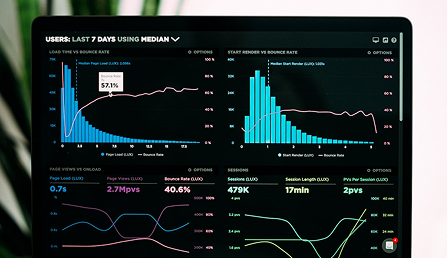
Shopify’s native analytics dashboard tracks sessions, conversion rate, average order value, and sales by channel without any additional setup or integration. A merchant who opens their store on a Monday has immediate visibility into where traffic originates, how that traffic converts, and what customers spend on average. The Winter 2026 Edition added deeper reporting layers on top of this foundation, per Shopify Winter 2026 Edition: Sidekick and 150+ Updates. For a new merchant, the baseline dashboard alone is sufficient to make informed decisions about traffic sources and product performance without additional tools.
AI Tools Reshaping Store Management
Shopify’s most significant recent investment is its suite of AI features introduced through the Spring 2026 Edition. Sidekick functions as a store co-pilot that can draft marketing campaigns, edit themes, build automation workflows, and adjust pricing rules through plain-language instructions. Campaign Autopilot handles the execution of marketing campaigns across channels, reducing the manual workload that typically consumes hours each week. Agentic Storefronts make your product catalog discoverable inside AI-powered search platforms, extending your store’s reach into channels that did not exist as commerce surfaces two years ago. Currently, 42% of merchants use Shopify’s AI features, and those merchants report 18% higher conversion rates than those who do not. One practical note: AI-generated content and automated workflows still benefit from a human review step before going live.
Extending the Platform With Apps
The Shopify App Store contains thousands of third-party integrations covering email marketing, subscription billing, loyalty programs, product reviews, upsell tools, and more. This is where functionality beyond the core admin lives. Advanced email automation, recurring billing, and referral programs are not included in the base platform; they require app installs, and many high-value apps carry monthly fees that add to your base plan cost. The App Store is best understood as an expansion layer rather than a fix for missing basics. The core platform handles operations; the App Store handles growth-specific requirements as your needs become more specialized. For businesses focused on scaling efficiently, knowing which apps deliver real returns versus adding cost without measurable impact is one of the most important decisions you will make after launch.
Shopify Pricing Tiers Explained: Which Plan Is Right for You
Shopify’s pricing is built on two parallel cost streams, and understanding both is essential before choosing a plan. Every merchant pays a monthly subscription fee to access the platform. On top of that, every sale generates either a payment processing fee (when using Shopify Payments) or a transaction fee (when using a third-party payment gateway). This means your true monthly cost scales directly with your revenue, not just with your plan tier. A merchant processing $50,000 per month on the Basic plan will pay meaningfully more in aggregate fees than the same merchant on the Advanced plan, even after accounting for the higher subscription cost. The right question is never “what does the plan cost per month?” but rather “what is my total cost of ownership at my current sales volume?”
Basic Plan ($29/month billed annually)
Basic is the entry point for solo founders and new stores with modest order volumes. It includes the core storefront, checkout functionality, and two staff accounts, giving a solo operator everything needed to launch and begin selling. The card processing rate starts at 2.9% plus 30 cents per transaction, and if you use a third-party payment gateway instead of Shopify Payments, an additional 2.0% transaction fee applies on every sale. Those higher per-transaction costs are manageable at low volumes, but they erode margin progressively as your order count grows. Basic is the correct starting point for most new merchants; it is simply not a cost-efficient long-term home once monthly revenue climbs consistently above $5,000 to $10,000.
Grow Plan (~$79/month billed annually)
The mid-tier plan, now labeled “Grow” in Shopify’s 2026 pricing lineup (previously called the Shopify plan), drops the online credit card rate to 2.7% plus 30 cents and reduces the third-party transaction fee to 1.0%. It also unlocks more robust reporting tools and additional staff accounts, making it suitable for merchants who have established consistent revenue and need better operational visibility. The upgrade decision here is mathematical: at approximately $10,000 in monthly sales, the fee savings from Grow over Basic begin to offset the higher monthly subscription cost. Once your transaction fee savings exceed the plan cost difference, upgrading is financially rational rather than merely aspirational.
Advanced Plan (Higher Monthly Fee)
Advanced is designed for scaling merchants who need the platform’s full analytical infrastructure. It includes advanced report building, third-party calculated shipping rates, and 15 staff accounts, reflecting a business with a real team and complex logistics. The transaction rates step down again at this tier, and at monthly revenue volumes above $20,000 to $50,000, the lower fees justify the premium subscription cost. Shopify’s official pricing page details current rates across all tiers so you can run your specific numbers before committing.
Shopify Plus (Enterprise, Starting at ~$2,300/month)
Shopify Plus is the enterprise tier, built for brands that have outgrown the standard plans. Starting at approximately $2,300 per month, it now serves 47,000-plus stores and has grown 34% year over year. Brands actively migrate to Plus from legacy platforms because of lower total cost of ownership and faster time-to-market; self-hosted alternatives carry hidden costs in hosting infrastructure, DevOps labor, and agency retainers that rarely appear as a single budget line. Plus includes dedicated merchant success support, fully customizable checkout via Checkout Extensibility, and B2B-native features, making it a viable infrastructure choice for wholesale and direct-to-consumer brands simultaneously. For a detailed comparison of all Shopify pricing plans, independent breakdowns can help validate your decision at this investment level.
The Practical Decision Rule
Choose your plan based on actual monthly transaction volume and team size, not on where you aspire to be in two years. Most first-time merchants should launch on Basic, monitor their monthly sales volume, and upgrade when the transaction fee savings from a higher-tier plan mathematically exceed the monthly plan cost difference. That break-even threshold is specific to your average order value and total monthly revenue, so run the numbers with your real figures before upgrading. Starting lean and upgrading on evidence is always the more profitable path.
Who Uses Shopify and What Are They Selling
Shopify’s scale in 2026 is substantial enough that the numbers themselves carry meaning for anyone evaluating the platform. There are currently 5.6 million active stores operating on Shopify globally, with Store Leads tracking 2,882,047 live stores as of mid-2026 Q2. That live store count grew 11% year-over-year in Q1 2026, a figure worth pausing on because it reflects sustained, compounding adoption rather than a single surge. The platform has grown continuously from roughly 753,977 stores in Q1 2019 through today, through pandemic booms, post-COVID corrections, and economic headwinds. For a new merchant, this context matters: you are joining a platform with demonstrated durability, not a temporary spike in ecommerce enthusiasm.
What Categories Are Most and Least Crowded
Understanding what existing merchants are selling is one of the most practical data points available to anyone choosing a niche. Apparel and clothing accounts for 22.3% of all Shopify stores, which means more than 600,000 existing stores on the same platform are competing in that single category. Home and Garden follows at 9.6%, and Beauty and Fitness at 8.2%. These three categories alone represent roughly 40% of the entire platform. For a new merchant, this breakdown serves as a competitive density map. Entering apparel means stepping into the most crowded space on Shopify. Categories with lower store concentrations, including food products, pet supplies, and sporting goods, represent relative openings where platform-level competition is thinner, even if demand is also smaller. Knowing the category distribution before choosing your niche is a meaningful competitive advantage that many first-time founders skip entirely. According to Shopify Statistics 2026: Platform Growth and Market Data, the platform processed over $280 billion in annual GMV in 2026, confirming that revenue is genuinely distributed across this merchant base.
The Full Merchant Spectrum, From Handmade Goods to Enterprise Brands
Shopify serves a merchant range that is broader than most people expect. At one end, a solo founder with a handmade product and no technical background can launch a functional store in an afternoon using the platform’s built-in tools, requiring no developer involvement. At the other end, Shopify Plus, the platform’s enterprise tier, now powers more than 47,000 large-scale commercial operations and grew 34% year-over-year, making it the fastest-growing segment on the platform. That enterprise growth is driven substantially by brands migrating away from more complex and expensive platforms, attracted by lower total cost of ownership and significantly faster time-to-market. The same infrastructure that supports a first-time candle maker is also handling high-volume enterprise operations, which reflects genuine platform flexibility rather than marketing positioning.
Market Position and What It Means for Merchant Confidence
Shopify holds 28% of the global ecommerce platform market share, compared to WooCommerce at 21%, and that gap is continuing to widen according to Shopify Analytics: Trends, Insights and Shopify Market Share 2026. Critically, this is not simply a volume lead. Store Leads data indicates that the average Shopify merchant generates more revenue than the average WooCommerce merchant, meaning the platform is attracting higher-performing businesses, not just accumulating more low-activity stores. That merchant quality gap matters for practical reasons: a platform populated by higher-revenue merchants attracts better app developers, more capable agency partners, and more sophisticated third-party integrations, all of which benefit every store on the platform.
Global expansion data reinforces confidence in the platform’s trajectory. Thirty percent more global merchants joined Shopify in the first half of 2024 alone, confirming that adoption is no longer primarily a North American story. Merchants across the UK, Canada, Australia, India, and European markets are validating the platform in commercially diverse contexts, and that international adoption strengthens the overall ecosystem for everyone operating within it.
Shopify as an Omnichannel Platform, Not Just a Website Builder
Most people discover Shopify as a way to build an online store, and that framing made sense a decade ago. By 2026, it no longer captures what the platform actually does. Shopify has evolved into what the company itself describes as “the infrastructure layer for global commerce,” a unified backend that connects your online storefront, physical retail locations, social media channels, and third-party marketplaces under a single operating system. This is not a marketing reframe. It reflects a genuine architectural shift in how the platform is built and how merchants actually use it.
The data confirms this shift clearly. In 2024, 90% of Shopify merchants were connected to two or more sales channels, meaning the single-channel store has become the exception rather than the standard among active merchants. Shopify is not just a place where you build a website and wait for customers to arrive. It is a system designed to push your products into every space where your customers already spend their time, while keeping inventory, orders, and customer data synchronized behind the scenes.
Social Commerce Is Now a Core Channel
Social platforms have become genuine selling surfaces, not just marketing channels, and Shopify’s integration data illustrates how far this has progressed. Instagram is currently connected to 48.1% of Shopify stores, making it the dominant social commerce channel on the platform. Facebook follows at 27.8%. TikTok, used by 13.4% of Shopify stores, is the fastest-growing social channel in the ecosystem by a significant margin. That trajectory matters because TikTok is where product discovery is now happening at scale, particularly in apparel and beauty categories, which together represent over 30% of all Shopify stores. For any merchant building a brand in those categories, ignoring TikTok as a sales channel is increasingly a structural disadvantage rather than a strategic choice.
Selling in Person Without a Separate System
Shopify’s point-of-sale system extends the same backend to physical environments. Merchants who sell at retail locations, weekend markets, pop-up events, or trade shows can process in-person transactions through Shopify POS, and every sale, inventory update, and customer record syncs automatically with the online store. There is no manual reconciliation, no separate inventory spreadsheet, and no disconnected customer database. The admin that manages your online store is the same admin managing your physical sales, which eliminates the fragmentation that typically complicates multi-location retail.
Infrastructure Built for Peak Demand
The most concrete proof point for Shopify’s infrastructure capabilities came during Black Friday and Cyber Monday 2025, when merchants on the platform collectively reached $4.2 million in sales per minute at peak volume. That figure represents simultaneous high-volume traffic across online stores, social channels, POS terminals, and marketplace integrations, all running on the same platform without degradation. For a beginner evaluating whether a platform can grow with your business, that number answers the question directly. The infrastructure is not built for small stores that might scale someday. It is already handling enterprise-level commerce at global scale, and your store runs on the same system.
The Profitability Gap: What Shopify Does Not Do For You
Every previous section of this guide has described what Shopify provides. This section addresses what it does not, because that distinction is the one most beginners never encounter until they have already spent money learning it the hard way.
Shopify is infrastructure. It is the foundation on which a store is built, not the engine that makes that store profitable. The platform gives you a storefront, a checkout, and a set of tools to manage your operations. It does not give you customers, traffic, or a sustainable return on your advertising spend. Of the 5.6 million active stores currently live on Shopify globally, a meaningful fraction are generating consistent profits. The rest are in various stages of struggling, stagnating, or quietly shutting down. Store count and profitable store count are two entirely different numbers, and the platform itself makes no guarantee about which category any given merchant will occupy.
The Traffic Gap
The first and largest gap is traffic acquisition. Shopify does not send visitors to your store by default. No organic rankings appear automatically. No paid campaigns run on your behalf. No social audience assembles on its own. Every visitor who lands on your store arrives because you, the merchant, paid for that visit through advertising, earned it through SEO, or attracted it through content and social partnerships. Those are entirely separate disciplines, each requiring its own strategy, budget, and expertise.
This matters because the cost of customer acquisition is the single largest variable in whether a Shopify store survives. Research on Shopify store performance identifies traffic quality and purchase intent mismatch as one of the most common causes of poor results. Merchants drive volume, but they drive the wrong volume. High bounce rates and low session durations signal that the traffic arriving at a store was never likely to buy. Acquiring traffic and acquiring the right traffic are not the same thing, and Shopify has no mechanism to distinguish between them for you.
The Ad Spend Efficiency Gap
The second gap is ad spend efficiency. Many merchants running paid campaigns on Meta and Google lack the attribution modeling, audience segmentation, and creative testing frameworks needed to understand whether their spend is working. Shopify’s native analytics are genuinely useful for understanding what happened after a visitor arrived on your store. They show page views, add-to-cart events, and completed checkouts. What they cannot show you is whether the campaign that sent those visitors is acquiring customers at a sustainable cost, whether a different audience segment would convert at twice the rate for the same budget, or whether an entire ad creative is producing clicks but zero purchases. That structural blind spot produces what practitioners call ad waste, and it compounds silently over time.
The Conversion Rate Reality
A number frequently cited in Shopify marketing deserves careful framing here. Shop Pay’s checkout conversion rate of 72.5%, compared to the industry average of 62.6%, is a checkout-stage metric. It measures the percentage of people who reached your checkout and completed their purchase. It does not describe your store-level conversion rate, which measures the percentage of all visitors who make any purchase at all.
According to ecommerce conversion rate benchmarks for 2026, store-level conversion rates for most ecommerce businesses fall between 1% and 4%. The average Shopify store converts approximately 1.4% to 1.8% of all visitors. Top-performing stores reach 3.2% or higher. That gap between average and top-tier performance represents recoverable revenue, and it is recovered through better product pages, faster load times, stronger trust signals, and reduced friction at every stage of the browse-to-buy journey. Merchants who misread the checkout metric as a store-level performance indicator tend to underinvest in the on-site improvements that actually lift conversion rates.
The Merchant Reality
The same data showing 5.6 million active stores also reflects substantial store turnover across the platform. Stores launch, allocate budget to paid advertising, fail to reach profitable unit economics, and close. Shopify does not cause these failures; its infrastructure is sound. But the platform also does not prevent them. The merchants who succeed share a pattern: traffic strategy, ad spend efficiency, and conversion optimization are all functioning together, not in isolation. Fixing one lever while ignoring the others produces marginal results at best.
This is precisely the gap that ecommerce growth partners like Happy Oak Ecommerce are built to close. Optimizing ad campaigns for efficiency, attracting targeted visitors, and eliminating structural ad waste are not features the platform provides. They represent the layer of strategic expertise that sits between having a Shopify store and operating a profitable brand.
Is Shopify the Right Platform for Your Business?
Shopify is a strong fit for a specific type of business, and being honest about that distinction will save you significant time and money. The platform is purpose-built for direct-to-consumer product brands that want to own the customer relationship from first click to repeat purchase. Unlike selling through a marketplace, a Shopify store gives you full access to every customer’s order history, email address, and behavioral data. That data belongs to you, not a third-party platform, and it becomes the foundation for email marketing, loyalty programs, and paid retargeting campaigns that compound in value over time. Merchants who plan to sell across multiple channels also benefit significantly; 90% of Shopify merchants were connected to two or more sales channels in 2024, reflecting how naturally the platform extends beyond a single storefront. Brands that anticipate scaling should also note that Shopify Plus exists precisely for that moment, and third-party validation confirms the platform holds up at enterprise scale. Shopify has been named a Leader in the 2025 Gartner® Magic Quadrant™ for Digital Commerce for the third consecutive year, ranked highest for ability to execute, and holds a Leader designation in the 2024 Forrester Wave for B2B Commerce Solutions. Merchants are not outgrowing this platform.
That said, Shopify is not the right fit for every situation. Service-only businesses with no physical or digital products to sell gain little from a platform built around product catalogs, inventory management, and checkout infrastructure. Businesses whose entire discovery model depends on marketplace algorithms, such as those built entirely around Amazon or Etsy search, will find that Shopify provides infrastructure they have no traffic strategy to activate. Merchants who require deep custom back-end logic should also budget honestly; a Basic plan can scale beyond $2,000 per month once apps, transaction fees, and necessary upgrades are factored in.
Three Questions to Answer Before You Commit
Before signing up, ask yourself three questions honestly. First, do you have, or can you realistically build, a traffic acquisition strategy? Shopify converts visitors; it does not generate them. Second, are you prepared to invest in paid advertising or organic content to drive people to your store? The platform risk of choosing Shopify is genuinely low. The growth risk is the marketing investment required to make any storefront viable. Third, do you have the operational capacity to manage orders, fulfillment, and customer service from a single platform? Shopify’s consolidated infrastructure only simplifies operations for teams that are prepared to use it.
The low barrier to entry is a real advantage worth acknowledging directly. Shopify’s Basic plan lets any merchant launch a fully functional store without a developer, with a built-in payment processor and inventory management included from day one. For early-stage merchants, this eliminates the technical and financial risk that open-source alternatives carry, where maintenance costs can reach $40,000 to $150,000 per year past $2M in GMV. Start with the platform confidently. Direct your attention toward the traffic and marketing strategy that will actually determine whether your store succeeds.
The Bottom Line on Shopify
Shopify has earned its position as the world’s most widely adopted ecommerce platform. With 28% global market share, 5.6 million active stores, and $293 billion in GMV processed in 2024 alone, the numbers confirm what merchants at every stage already know: this is proven infrastructure built to scale.
The critical nuance worth restating is this. Shopify gives you the foundation. It handles your storefront, checkout, payments, and inventory. What it does not give you is customers, profitable traffic, or a conversion strategy. Those are the levers that separate growing Shopify brands from stalled ones, and they require deliberate work outside the platform itself.
If you are evaluating Shopify for the first time, start with the Basic plan, get real traffic to your store, and prioritize understanding your customer acquisition cost before you scale any ad spend. Validate the product first. Scale with confidence second.
For merchants who already have a store and are trying to close the gap between launch and sustainable profitability, Happy Oak Ecommerce works specifically with Shopify brands to reduce ad waste, sharpen targeting, and drive the kind of traffic that actually converts.
Conclusion
Starting an online store can feel overwhelming, but Shopify removes the complexity so you can focus on what matters most: building your business. Here are the key takeaways to remember:
- Shopify is a beginner-friendly platform trusted by millions of merchants worldwide
- It offers everything you need in one place, from storefront design to payments and shipping
- Flexible pricing plans make it accessible for businesses at every stage of growth
- No technical skills are required to launch a professional, fully functional store
Now it is your turn to take action. Start your free trial today and explore the platform firsthand. The tools are ready, the resources are available, and your first sale is closer than you think. Every successful merchant once stood exactly where you are now. Take the first step and build the store you have always imagined.